© 2026
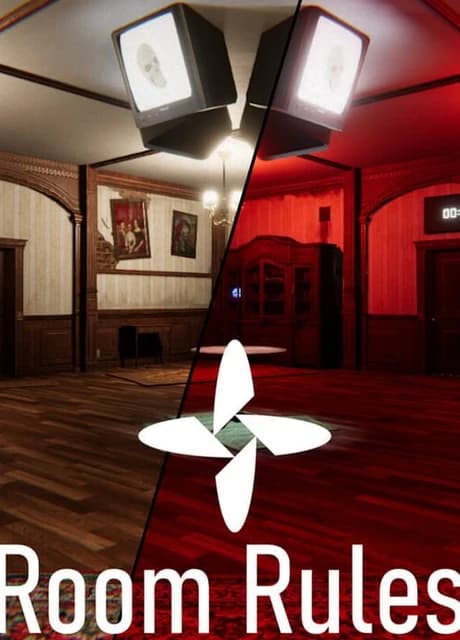
Room Rules is an experimental simulator focused on the study of anomalous rooms. Follow the protocols, complete test sessions, and analyze the behavior of anomalous “Rooms.”
An atmospheric first-person research experience where you act as an Operator undergoing procedural trials within an unstable anomalous space known as the Room.
Each session is a controlled experiment. Each action is part of a protocol. Failure does not end the trial — it returns you to the beginning.
You begin each session inside a research hub.
Here you:
Once the procedure is activated, access to the object is granted.
Upon entering the house, the timer starts.
Inside is the Room — the primary anomalous testing zone.
Screens display an object that must be located.
Your actions depend on the situation:
Once the counter reaches its final value, you may exit the house. The timer stops.
After returning to the hub, you can:
The experience encourages repetition, optimization, and strict adherence to procedure.
This is not a traditional horror game or a classic puzzle experience. It is a simulation of working with an object that cannot be fully understood.
You are not exploring the Room. You are executing a procedure.
Document Status: Internal Use Only Access Level: ███ Object: Interactive Research System Room Rules Purpose: Operator training for interaction with anomalous spatial entities classified as “Room”.
1.1. Room Rules is a simulation environment designed to model procedures for controlling and studying unstable spatial anomalies. 1.2. The user receives the status of “Operator” and is granted access to Test Sessions. 1.3. The primary ANOMALOUS OBJECT CONTROL PROTOCOL: “ROOM” is currently active. 1.4. Information regarding additional objects is under review: ███████████████████. 1.5. Expansion of the Research Zone is planned after the completion of phase ██/██.
2.1. Preparation of Operators for work involving spatial anomalies of varying instability. 2.2. Analysis of Operator behavior under exposure to unpredictable environmental factors. 2.3. Evaluation of procedural accuracy and compliance with Protocol regulations. 2.4. Collection of data required for further Protocol revisions: ███████.
[ACCESS RESTRICTED]
3.1. The full sequence of Operator actions has been redacted under directive from the Control Department. 3.2. Access to sections 3.3–3.7 is prohibited (status: CLASSIFIED). 3.3. ██████████████████████████████████████████████████ 3.4. ███████ interaction ████████ transition point ███ 3.5. In the event of deviations from procedure, Protocol ███–FAILSAFE will activate. 3.6. ██████████████████████████████ (removed). 3.7. The Operator must follow all current terminal instructions.
4.1. Interface presented in the form of protocols, reports, printed instructions, and technical documents. 4.2. The environment reflects a minimalist laboratory design fully aligned with active procedures. 4.3. Psychological tension is created through the uncertainty of the anomalous object and the requirement for strict rule adherence. 4.4. The system supports expansion. New “Room”–class objects will be integrated following classification: ██ class, ██ stability rating, access level █ or higher.
5.1. The primary Protocol is fully operational. 5.2. Preliminary research on additional objects is ongoing. 5.3. Phases ██–██ completed. Phase ██ is currently undergoing internal testing. 5.4. Documentation on object “Room–██” is temporarily unavailable.
6.1. Non-compliance increases the probability of Error to ██%. 6.2. An Error will result in immediate Operator evacuation and full data reset. 6.3. Re-training is permitted and recommended. 6.4. Information regarding consequences of three or more consecutive Errors is classified: ████████████████.
English, Russian
No reviews yet. Be the first to share your thoughts!
Write a ReviewNo discussions yet. Be the first to start a conversation!